Product design, financial services
2026
Designed a scalable account selection system that adapts to complex account hierarchies, varying permissions, and datasets ranging from 1 to 30,000+ accounts.

Overview
TreasuryEdge is an enterprise platform used by clients to manage accounts, payments, and reporting. Within the reporting experience, users needed a way to accurately identify and select accounts across increasingly large and complex datasets.
Role
Lead UX designer
Collaborators
Design, product, engineering
Tools
Figma, Miro,
Magic Patterns
Timeline
5 months,
Jan-April 2026
Background
Defining user types
Instead of fixed personas, users are defined by role and access

Internal users
BNY teams supporting operational and servicing workflows.
Client users
Enterprise treasury teams managing accounts and reporting workflows
External users
Third-party users (ex. contractors) with limited or controlled account access.
Account structure and identification
Users can have physical and/or virtual accounts. Virtual accounts act as child accounts, sitting under a parent physical account. There can be one, many, or no virtual accounts under a physical.
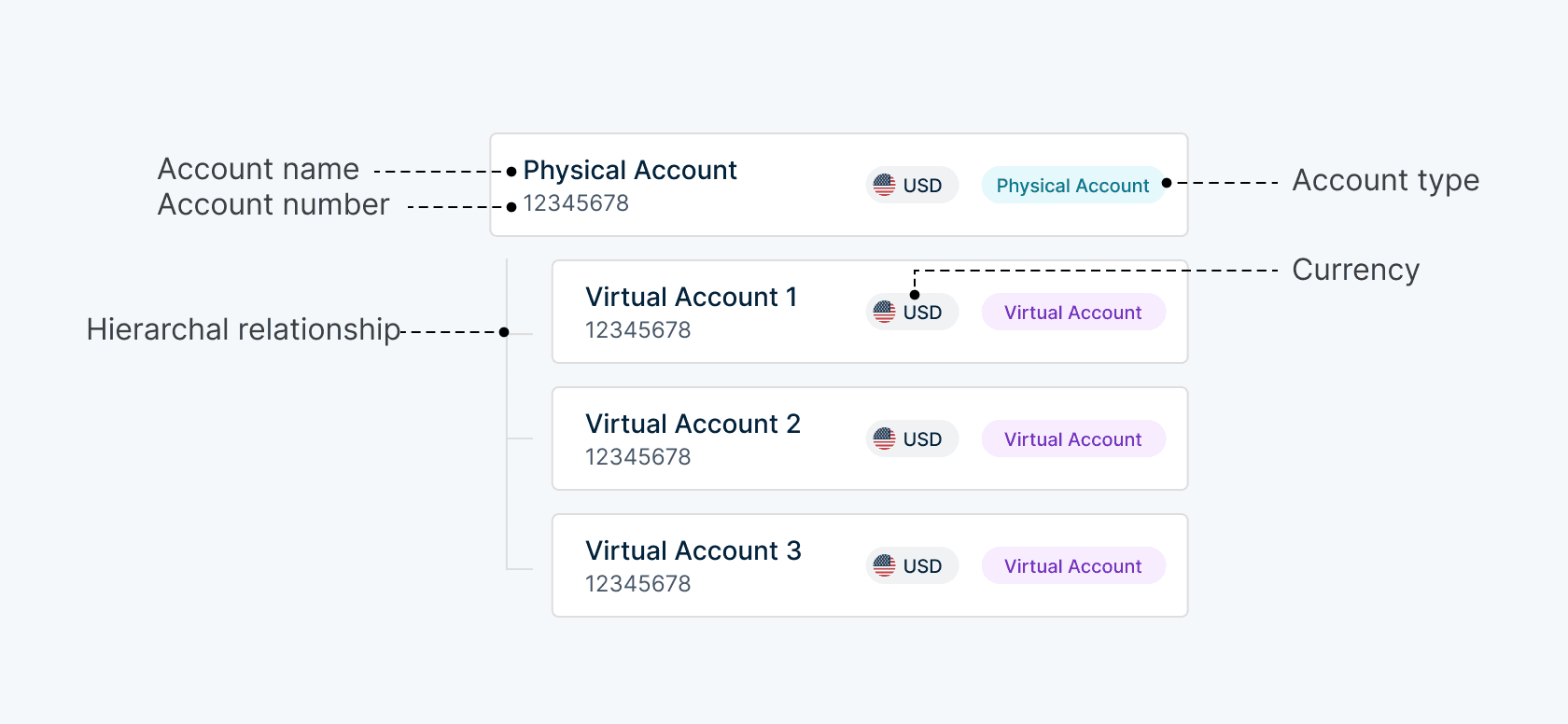
Within reporting workflows, users rely on account name, number, currency, type, and hierarchical relationships to accurately identify accounts.
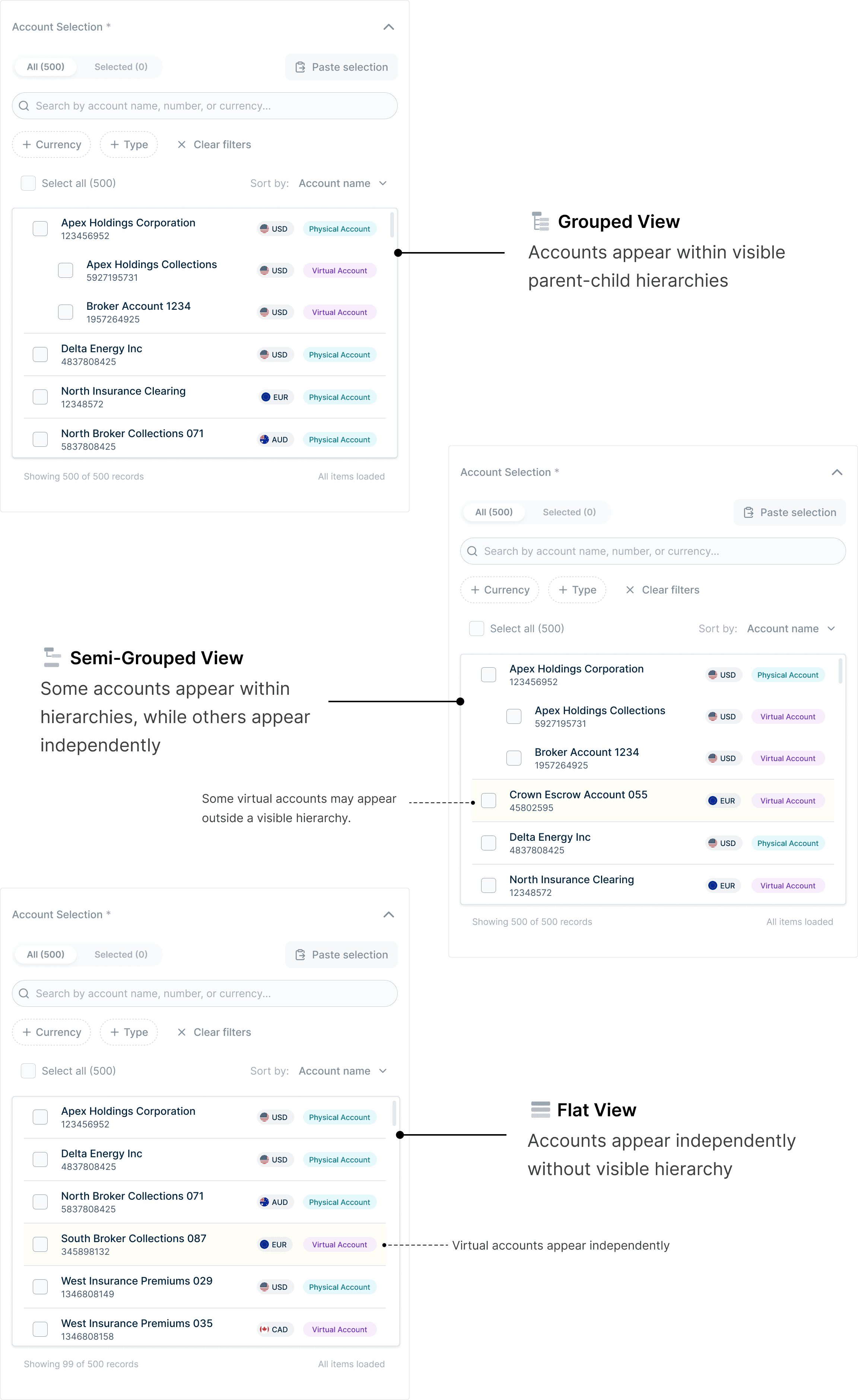
Account visibility varies based on user entitlements, which results in three hierarchy patterns: semi-grouped, grouped, and flat.
Problem
Understanding user behavior
I spoke with product owners and analyzed existing workflows to better understand user behavior.
Insight
Account selection is a retrieval and validation problem, not a discovery problem.
Users often arrive with externally maintained account lists, known account numbers, and specific accounts they intend to select.
Problem Statement
Users needed a way to quickly and accurately identify accounts across increasingly large and
complex datasets.
User need
Quickly identify and select relevant accounts across hierarchical structures
Business need
Support consistent account selection across growing datasets and workflows
Solution
Permission-Driven Rendering
Different entitlement models required three rending patterns: grouped, semi-grouped, and flat.
Establishing three different hierarchy patterns
Challenge
Users may have access to one, many, or all accounts within an organization
Solution
I established three rendering patterns that adapt account hierarchy visibility based on entitlements

Different selection behaviors for varying dataset sizes
Account selection patterns evolved alongside increasing account volume and selection complexity.
01
Bulk selection for large account sets
Intent
I want to quickly select a large externally maintained set of accounts.
Solution
Paste-and-match bulk selection.
02
Search and filter
Attribute-based filtering
Intent
I want to retrieve accounts that share a common attribute.
Solution
Filter accounts by currency, type, or other shared attributes.
Hierarchy-Aware Search
Intent
I want to retrieve a parent account and all associated accounts.
Solution
Searching a physical account returns both the parent and associated virtual accounts.
03
Simple selection

Intent
I want to select a small number of known accounts.
Solution
Dropdown selection.
Process
Design Approach
To quickly validate complex behaviors and edge cases, I used AI-assisted prototyping as interactive wireframes to align with product and engineering early in the design process.
Once aligned, I translated approved patterns into high-fidelity designs and reusable system components in Figma.

Evolving Problem Definition
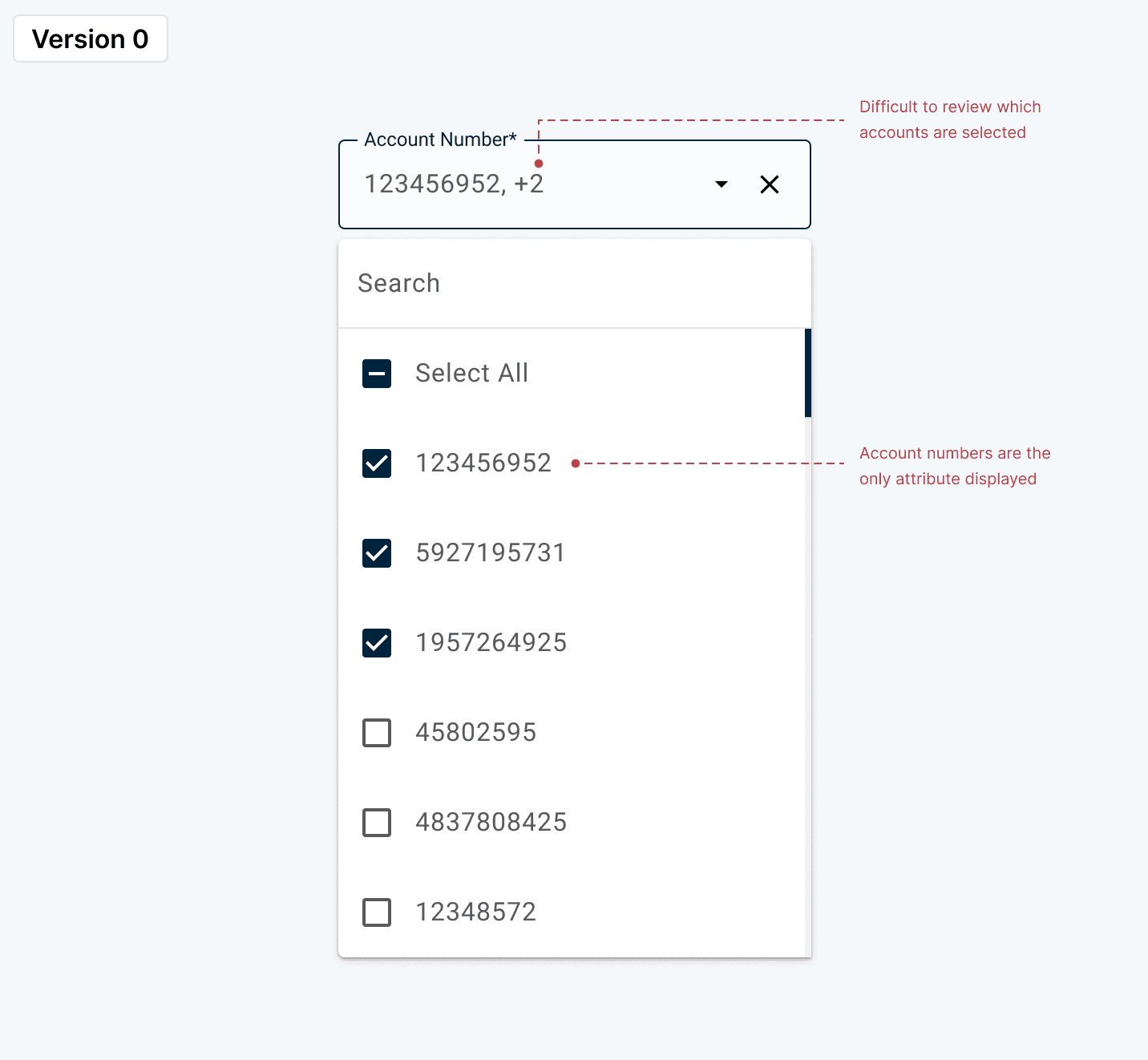
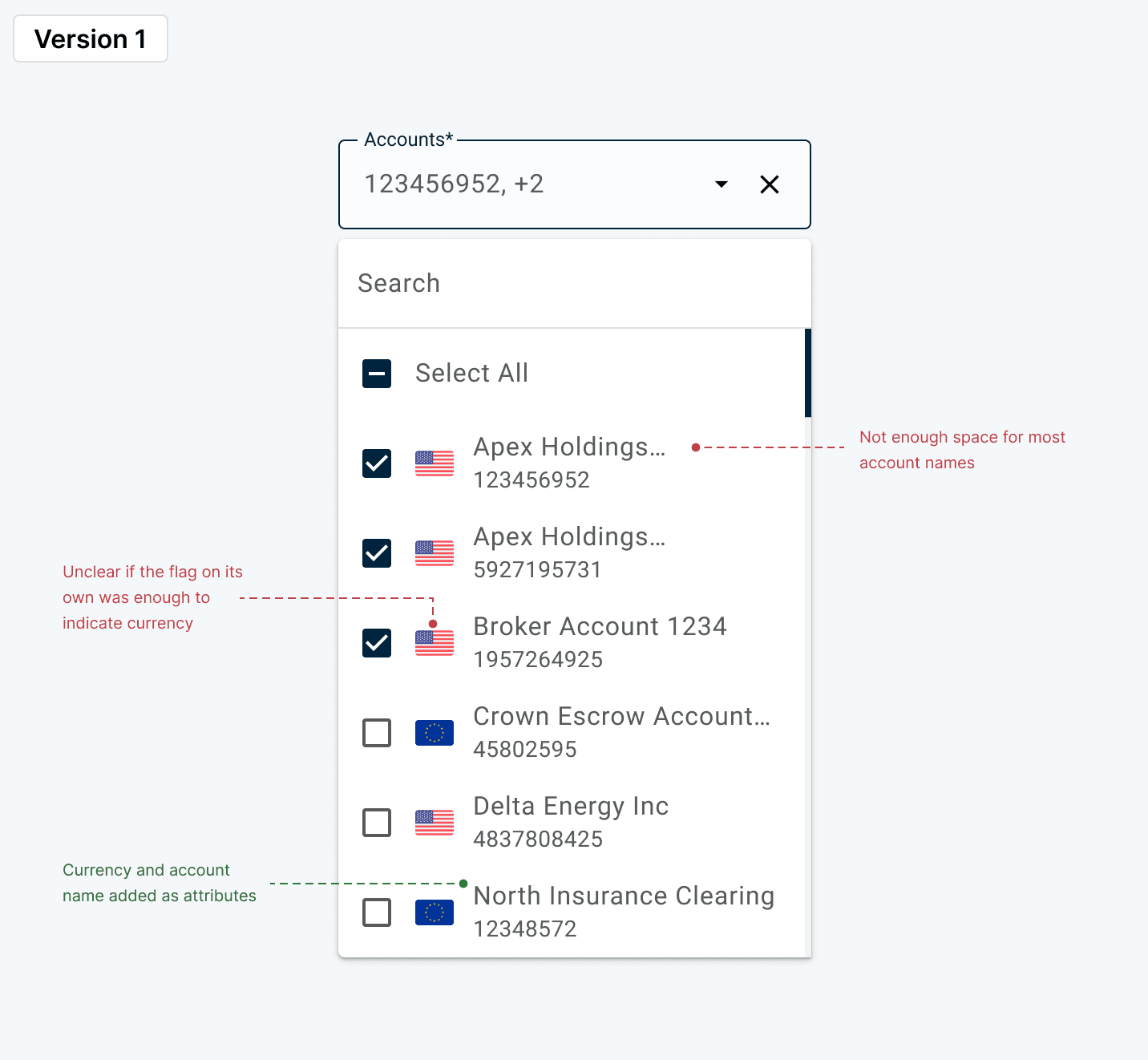
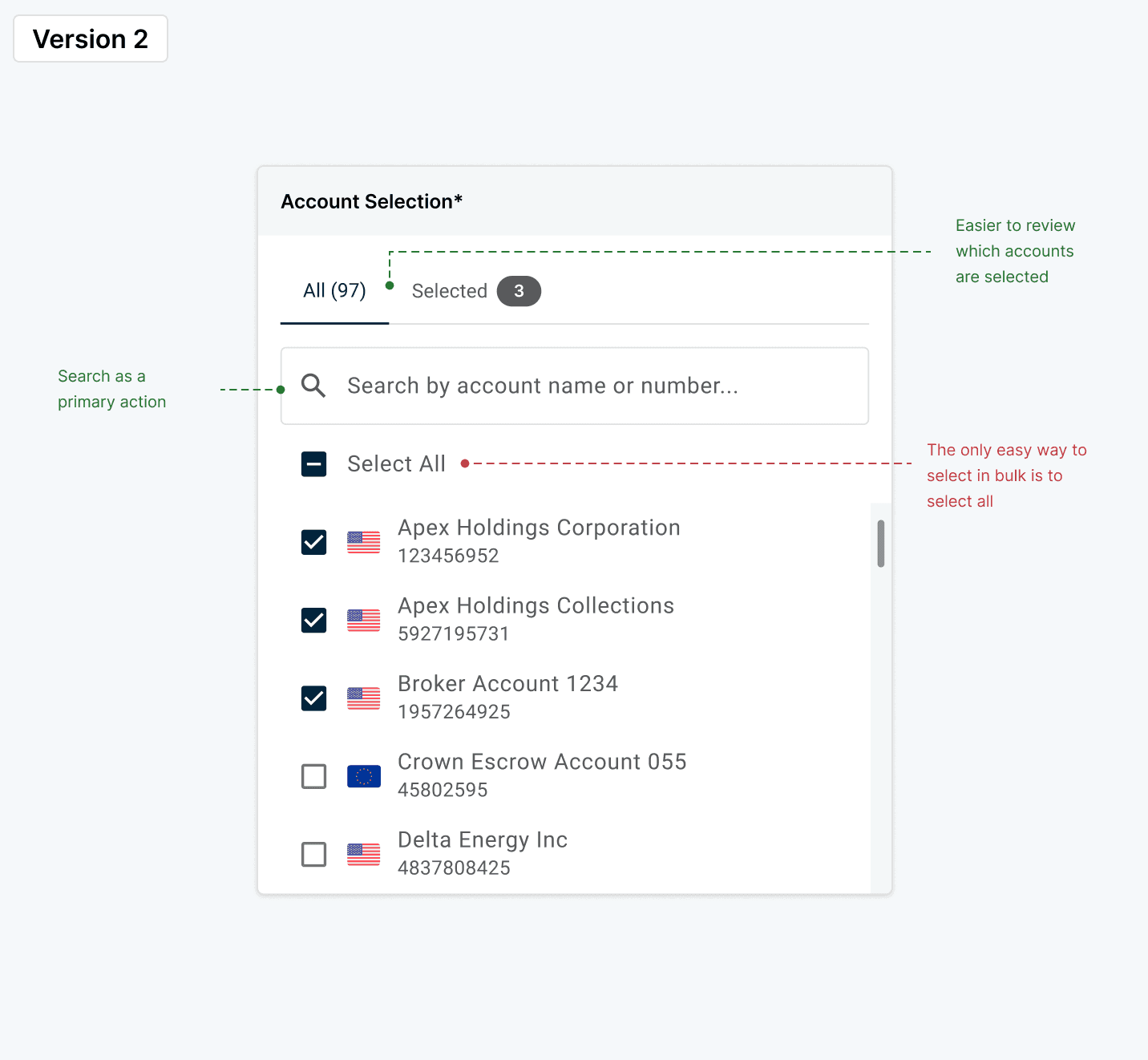
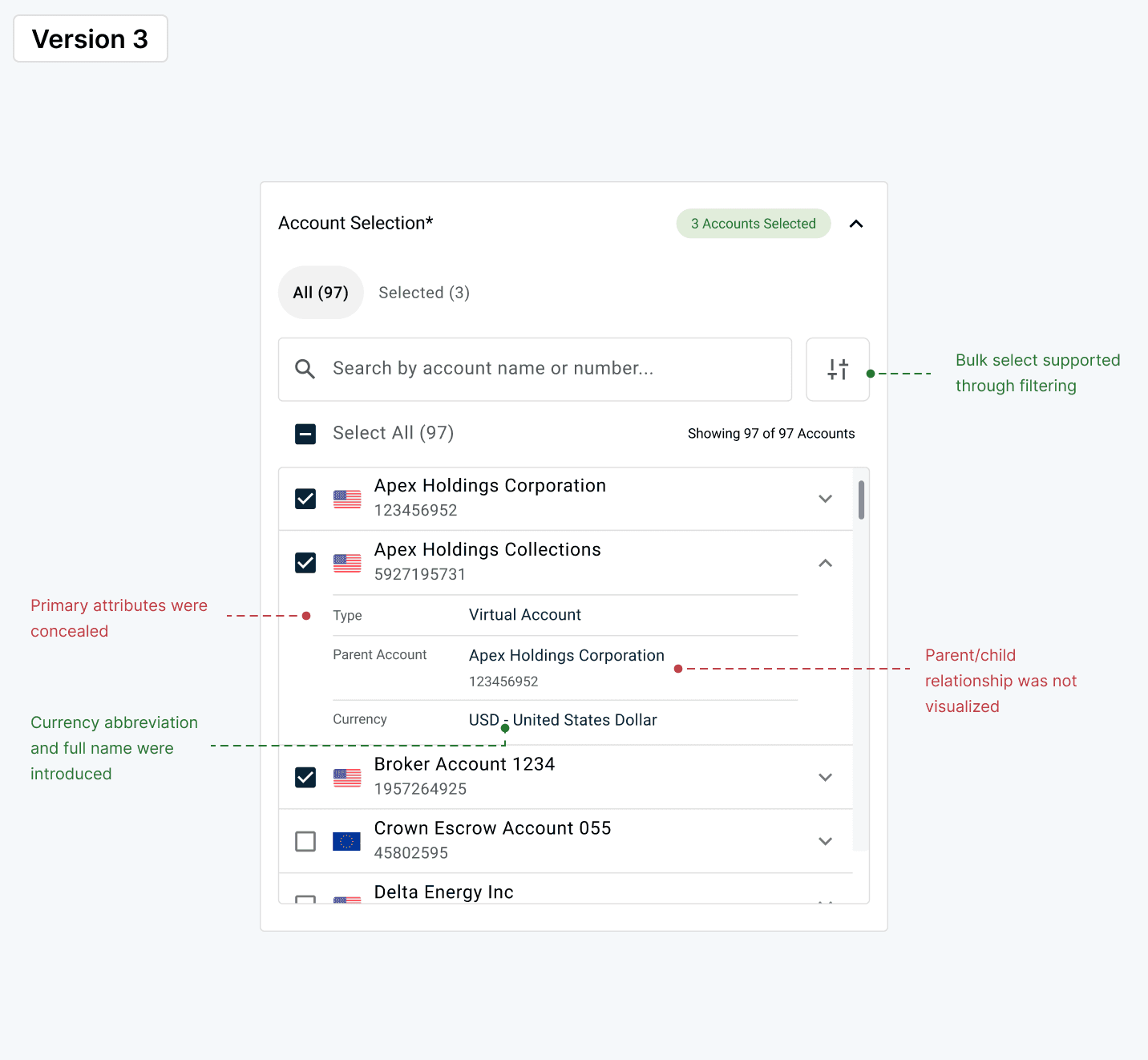
What initially began as a lightweight enhancement to an existing account selection dropdown into a broader systems problem requiring a new scalable selection model.

Reflection
Key Takeaways
This project taught me the importance of designing beyond the immediate use case. What started as a reporting feature evolved into a reusable platform component by focusing on core user needs rather than workflow-specific requirements.
The experience strengthened my ability to balance scalability, flexibility, and consistency in complex enterprise systems.